疫病
| 中文 | English |
|---|---|
| 茄子疫病 | Phytophthora blight / Phytophthora disease of eggplant |
| 病原:Phytophthora capsici(辣椒疫霉菌) | Pathogen: Phytophthora capsici |
| 类型:卵菌病害(类真菌病害,Oomycete disease) | Type: Oomycete disease |
主要症状 / Main Symptoms
| 中文 | English |
|---|---|
| 危害部位包括叶片、茎基部和果实。 | Affects leaves, stem base, and fruits. |
| 叶片病斑初呈水渍状,后变为褐色坏死斑。 | Leaf lesions start water-soaked, later turn brown and necrotic. |
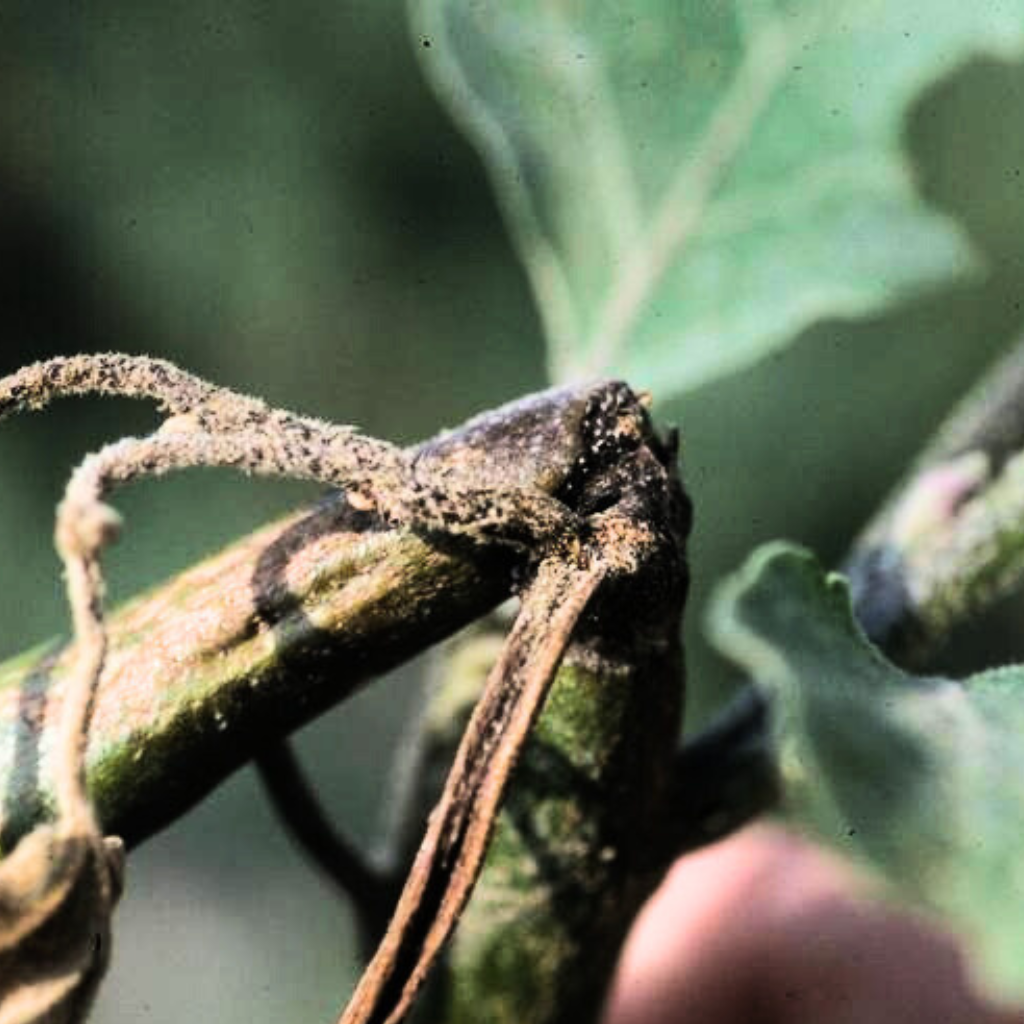
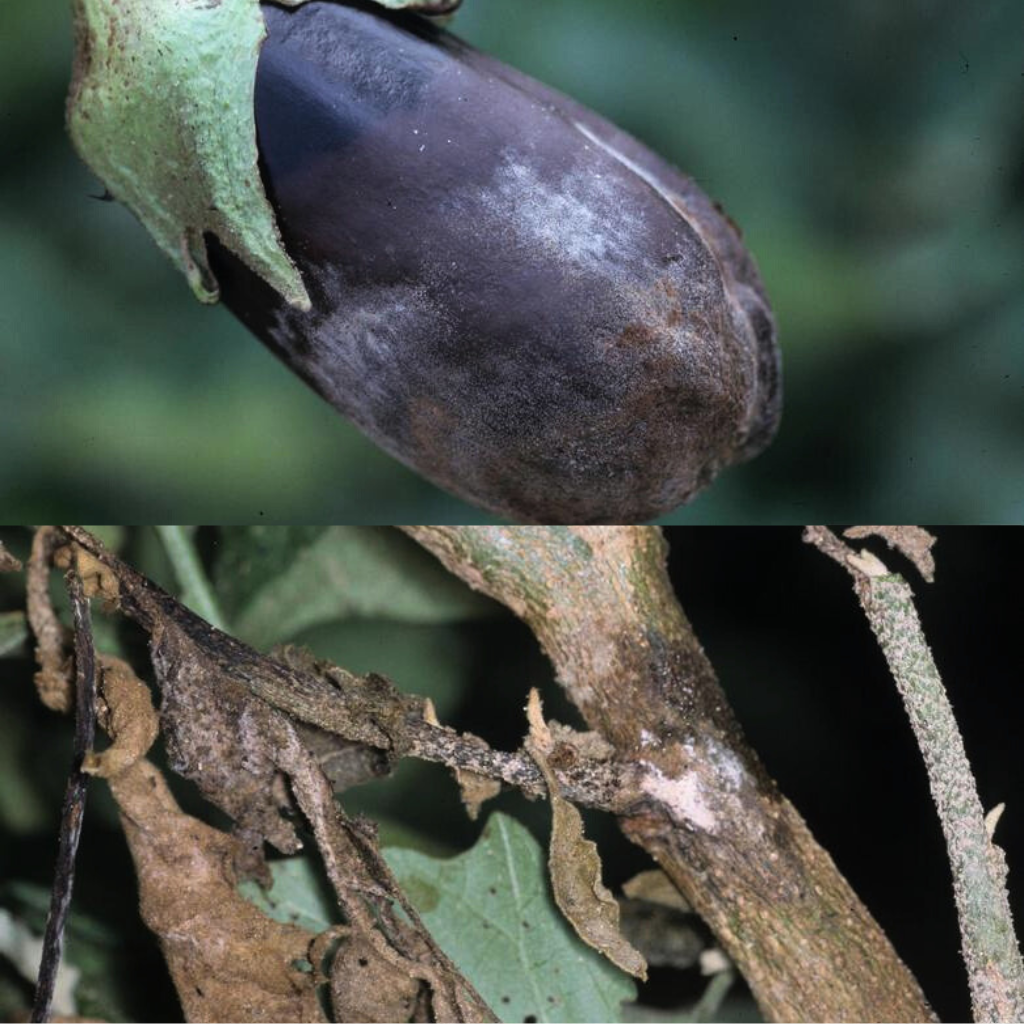
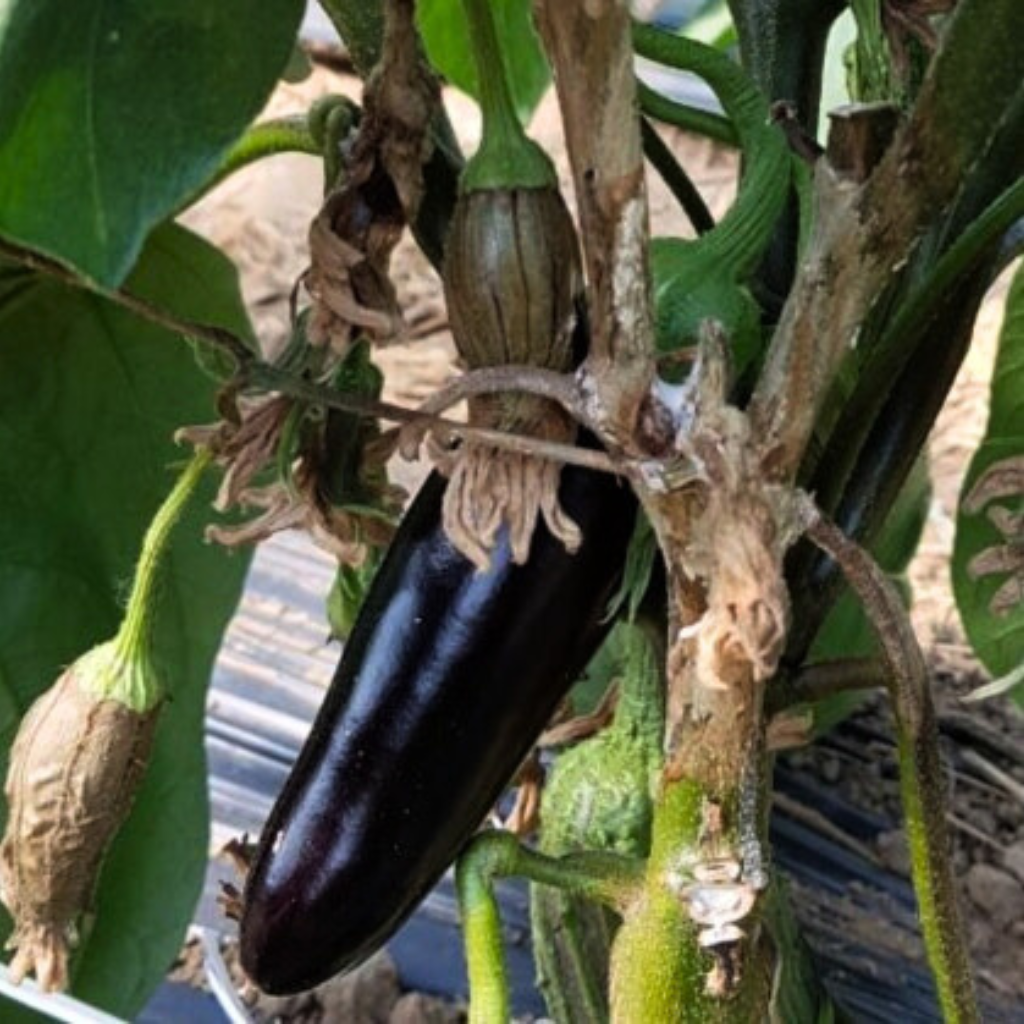
| 茎基部受害后呈暗褐色水渍状腐烂,常环割导致植株突然萎蔫死亡。 | Stem base shows dark brown water-soaked rot, often girdling and causing sudden wilting and death. |
| 果实染病呈水渍状软腐,表面生白色霉状物。 | Infected fruits show water-soaked soft rot, with whitish mold growth. |
| 高温高湿季节发病严重,可造成田间大面积倒伏。 | Disease is severe in hot and humid seasons, causing large-scale collapse in fields. |

发生规律 / Occurrence
| 中文 | English |
|---|---|
| 病原以卵孢子在土壤或病残体中长期存活。 | Pathogen survives long-term in soil or plant debris as oospores. |
| 通过灌溉水、雨水溅射、农事操作传播。 | Spread via irrigation water, rain splash, and field practices. |
| 高温高湿、排水不良、低洼积水地块易发病。 | High temperature and humidity, poor drainage, and low-lying wet fields favor disease. |